
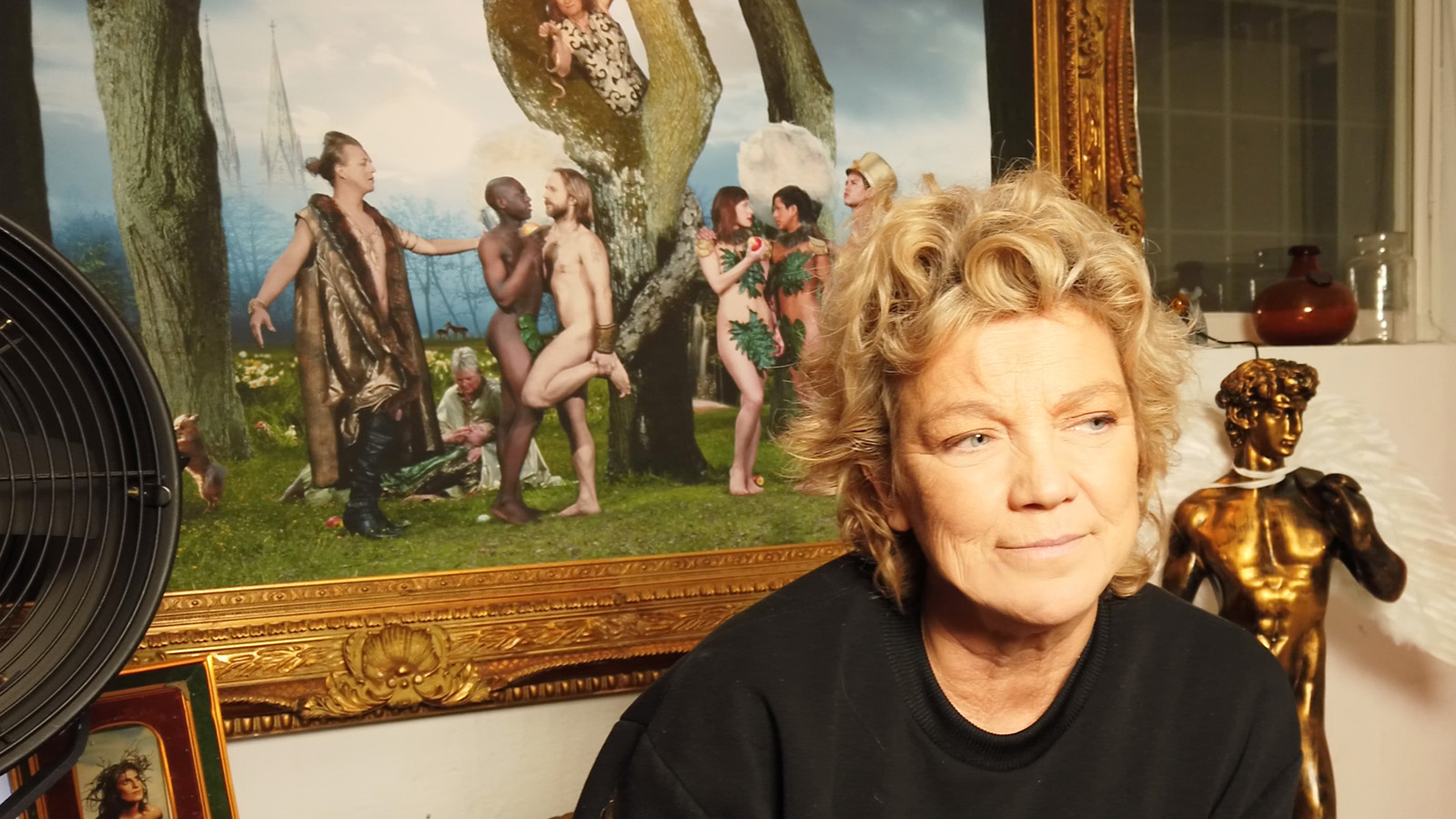
Elisabeth Ohlson’s art was never comfortable. It was courageous, uncompromising, and deeply human. Using the camera as her tool, she exposed power, norms, and injustice — giving voice to those who were rarely allowed to be seen or heard.
On 30 October 2024, Elisabeth Ohlson passed away after a period of illness. She was born in 1961 in Skara and died in Stockholm, but her artistic legacy extends far beyond geography. Her work has profoundly shaped conversations around freedom of expression, human rights, and the role of art in society.
Ohlson began her career as a newspaper photographer in 1980, grounded in a documentary tradition. This documentary gaze would come to define her entire artistic practice — yet she never remained there. By incorporating fiction, staging, and a consistent visual language, she created meticulously composed works in which every detail was carefully directed, making the message impossible to ignore.
Her major breakthrough came in 1998 with the groundbreaking photographic exhibition Ecce Homo. By placing Jesus among LGBTQ+ individuals, Ohlson employed powerful religious imagery to make visible lives, bodies, and experiences that had long been pushed to the margins. The opening took place at Uppsala Cathedral, and the exhibition immediately provoked strong reactions — from protests, bomb threats, and death threats to international diplomatic consequences, when the Pope cancelled a planned audience with Sweden’s then Archbishop K-G Hammar.
Who Has the Right to Define the Body?
The work The Doubter, presented in this exhibition, is a paraphrase of a painting by Caravaggio and was originally shown in the exhibition Id Trans (2018). In Caravaggio’s painting, the disciple Thomas doubts that Jesus has truly been resurrected. In Elisabeth Ohlson’s version, doubt is redirected elsewhere — towards society’s inability to accept that a person has had their breasts surgically removed.
In The Doubter, art history, the present moment, and human vulnerability intersect. The work raises questions that remain urgently relevant: Who holds authority over the body? Whose experiences are taken seriously? And why do certain bodies continue to provoke suspicion, questioning, and resistance?

Meet the Artists
What does it mean to be human in our time – when ideals, algorithms, and inner demands shape our lives?
Read more